

The Wheel of Life is a powerful tool that compares how your life is currently with how you’d ideally like it to be, providing a vivid visual representation.
As life coaches, you can use it as an assessment tool to help your prospects understand their life balance and personal satisfaction.
In this comprehensive guide, we will explore the Wheel of Life, its categories, benefits, and how it serves as an essential online tool for you.
What is a Wheel of Life?
The Wheel of Life is not a new concept. In Buddhism, the Bhavacakra represents the cycle of life, death, and rebirth. And it traces the origins of the Wheel of Life.

In the coaching business, however, you can use the Wheel of Life as a life-assessment tool. It helps your clients understand their current situation and identify areas for improvement.
The Wheel of Life is a popular visual exercise in personal development and coaching. You can use this tool to allow your clients to introspect on different areas of their life, assessing their actions and identifying where they would like to give more attention.
There are various categories or segments in the Wheel of Life. Each category represents a critical area of one’s life. The assessment process involves rating the level of satisfaction in each of these categories, which results in a visual overview of life satisfaction and balance.
Who Uses the Wheel of Life?
You can use many variations of the Wheel of Life depending on the focus of your coaching service.
- Life Coaches use the standard Wheel of Life to help clients assess overall life balance and identify areas for personal development.
- Business Coaches can use a Wheel of Business for business coaching, focusing on areas like sales, marketing, operations, and customer service.
- Health and Wellness Coaches could use a Wheel of Health that focuses on nutrition, exercise, sleep, and mental health.
- Career Coaches might customize categories around professional development, work-life balance, networking, and skill development.
The possibilities are endless, and you can adapt the Wheel of Life to suit the needs of each client.
Wheel of Life Categories
While you can customize the categories based on individual needs, there are eight standard categories. Here’s a detailed look at each of these categories:
1. Health
This category focuses on physical health and well-being. It includes diet, exercise, sleep, and overall physical health. It may also cover mental health, including stress levels and emotional well-being.
2. Friends & Family
This category assesses the quality of one’s relationships with friends and family. It considers the time you spend with them, the quality of your interactions, and your overall satisfaction with your relationships.
3. Significant Other/Romance
This category is about your romantic relationships. If you’re in a relationship, it assesses the quality of that relationship. If you’re single, it might determine your desire for a relationship or your satisfaction with being single.
4. Career
This category evaluates your job satisfaction, career development, work-life balance, and fulfillment from work. It can also include aspects such as job security and recognition.
5. Finances
This category is about your financial security and stability. It assesses your income, savings, financial goals, and overall financial health.
6. Personal Growth
This category focuses on self-improvement and personal development. It includes education, skills development, personal achievements, and progress toward personal goals.
7. Fun & Recreation
This category assesses your leisure and relaxation time. It includes hobbies, interests, travel, and other activities that you enjoy and that help you relax and recharge.
8. Physical Environment
This category evaluates your living environment. It includes your home, neighborhood, and the physical spaces you spend your time in. It assesses comfort, safety, and satisfaction with your physical surroundings.

You can rate each of these categories on a scale of 1 (least satisfied) to 10 (most comfortable), and the collective ratings provide a view of one’s life, highlighting areas that need more attention.
Some Examples of Wheel of Life Questions
The Wheel of Life assessment is subjective and personal. The questions might vary depending on the coaching services you offer.
Nonetheless, the following are some general questions you can include in your Wheel of Life assessment:
Career/Work: How satisfied are you with your current job or career path? Are you fulfilling your professional aspirations?
Finances: How comfortable do you feel with your current financial situation? Are you effectively managing your finances and saving for the future?
Health/Wellness: How would you rate your physical and mental health? Are you taking proper care of your well-being through exercise, nutrition, and stress management?
Family & Relationships: How strong are your connections with family members and close friends? Are your relationships supportive and fulfilling?
Personal Development: Are you actively pursuing personal growth and learning opportunities? Are you working on improving yourself intellectually and emotionally?
Fun & Recreation: How much time do you allocate to hobbies, leisure activities, and things that bring you joy and relaxation?
Romance/Love Life: If applicable, how satisfied are you with your current romantic relationship or love life?
Physical Environment: How content are you with your living environment? Does it promote comfort and tranquility?
Spirituality: How connected do you feel to your spiritual beliefs or practices? Are they providing you with a sense of purpose and peace?
Time Management: Do you feel in control of your time, or do you struggle with managing your schedule effectively?
Stress Management: How well do you handle stress and challenges?
Self-Care: Do you prioritize self-care and set aside time for relaxation and rejuvenation?
Communication Skills: How effective are your communication skills in expressing your needs and understanding others?
Goal Achievement: Are you making progress toward your short-term and long-term goals?
Why use the Wheel of Life in Coaching?
Here are some benefits of the Wheel of Life for you and your clients:
- You can understand your clients better, identify areas of satisfaction and dissatisfaction, and pinpoint where your coaching efforts can be most effective.
- You can help your clients identify priorities and set realistic, achievable goals.
- You can see how your client’s life balance and satisfaction levels evolve, providing a measure of the effectiveness of your coaching process.
- It encourages clients to actively assess their life balance and set goals, fostering a sense of ownership and commitment to your coaching process.
- It helps clarify and articulate feelings and perceptions that might otherwise be difficult to express, promoting profound understanding and effective communication.
- You can easily customize the categories to reflect the client’s unique circumstances and priorities, making it a flexible tool in various coaching contexts.
How to Create Your First Wheel of Life: The Simple Paper Method
Before exploring digital tools, you can create and use a Wheel of Life assessment right now with just paper and pen.
This hands-on approach helps you understand the concept deeply and lets you practice with clients immediately.
What You’ll Need
- Blank sheet of paper (letter or A4 size)
- Pen or pencil
- Ruler (optional, but helpful for straight lines)
- Colored pencils or markers (optional, for visual clarity)
Step-by-Step Instructions
Step 1: Draw Your Circle
Draw a large circle in the center of your paper. Make it big enough to fill most of the page – this circle represents your entire life.
Step 2: Divide Into Sections
Divide the circle into 8 equal sections, like slicing a pizza or pie. Draw lines from the center to the edge, creating 8 wedge-shaped segments.
Tip: Start by drawing a vertical line and a horizontal line to create 4 quarters, then divide each quarter in half.
Step 3: Label Each Section
Write one life category at the outer edge of each section. Use the 8 standard categories:
- Health
- Career
- Finances
- Personal Growth
- Friends & Family
- Significant Other/Romance
- Fun & Recreation
- Physical Environment
Or customize them based on what matters most to you or your client.
Step 4: Create Your Rating Scale
Inside each section, draw a scale from 0 to 10:
- 0 is at the very center of the circle (complete dissatisfaction).
- 10 is at the outer edge (complete satisfaction).
You can draw small tick marks or numbers from 0-10 along one of the section lines as a reference.
Step 5: Rate Each Area
For each life category, ask yourself (or your client):
“On a scale of 0 to 10, where 0 is completely dissatisfied and 10 is completely satisfied, how would I rate this area of my life right now?”
Be honest. There are no right or wrong answers. This is about your current reality, not where you think you “should” be.
Step 6: Mark Your Scores
In each section, place a dot or mark at the point that represents your rating. For example:
- If you rated Career as a 7, mark a dot at the 7 line in that section.
- If you rated Health as a 4, mark a dot at the 4 line in that section.
Step 7: Connect the Dots
Draw lines connecting all the dots you’ve marked. This creates the actual “wheel” shape that shows your life balance visually.
Step 8: Step Back and Observe
Look at the shape you’ve created. Ask yourself:
- Does it look like a smooth, round wheel?
- Or is it bumpy, uneven, and lopsided?
- Which areas stick out as particularly high or low?
Using Your Paper Wheel in Coaching
This simple paper exercise is powerful because:
- It’s immediate – You can do it in any coaching session without technology.
- It’s visual – Clients instantly see their life balance (or imbalance).
- It sparks conversation – The shape naturally leads to questions like “Why is career so high while health is low?”
- It’s memorable – Clients can take their paper wheel home as a visual reminder
- It tracks progress – Have clients create new wheels every 3 months and compare them
Many coaches keep clients’ paper wheels in their files and overlay them in future sessions to show progress visually. The transformation from a bumpy, small wheel to a larger, rounder one is a powerful motivation.
Once you’re comfortable with the paper method and understand how the Wheel of Life works, you can explore digital tools that automate the process, track changes over time, and create professional-looking assessments for your clients.
Common Wheel Patterns and What They Mean
Pattern 1: The Balanced Achiever
What it looks like: Most sections score between 7-9, creating a fairly round, full wheel.
What it means:
- Strong overall life satisfaction and balance.
- Effective at managing multiple life areas.
- May be in a stable, positive life phase.
Coaching approach:
- Celebrate this achievement – it’s not easy to maintain.
- Explore optimization: “What would make your 7s into 8s?”
- Watch for complacency or fear of change.
- Discuss maintenance: “What habits keep your wheel balanced?”
Watch out for: Sometimes high scores across the board can indicate:
- Rating generously without honest reflection.
- Avoiding deeper issues.
- Fear of acknowledging dissatisfaction.
Pattern 2: The Flat Tire
What it looks like: One or two sections score 3-4 while most others score 6-8.
What it means:
- Generally, functional life with specific problem areas.
- The low areas often drain energy from high-performing areas.
- May feel “stuck” despite success in other areas.
Coaching approach:
- Identify the “flat tire” area causing the most pain.
- Ask: “How is this low area affecting your high-scoring areas?”
- Focus coaching efforts on the 1-2 lowest scores first.
- Set specific, achievable goals to raise those scores by just 1-2 points.
Example questions:
- “Your career is an 8, but relationships are a 3. How does that relationship score impact your work performance?”
- “What would move your health from a 3 to a 5 in the next 30 days?”
Pattern 3: The Deflated Wheel
What it looks like: Most or all sections score below 5, creating a small shape near the center.
What it means:
- General life dissatisfaction or overwhelm.
- Possible burnout, depression, or difficult life circumstances.
- May feel hopeless or don’t know where to start.
Coaching approach:
- Start small – overwhelming someone already overwhelmed doesn’t help.
- Focus on basic needs first (sleep, nutrition, safety).
- Choose just ONE area to improve by ONE point.
- Build momentum through small wins.
- Consider whether professional mental health support is needed.
Important: If all scores are 0-2 and the person expresses hopelessness, this may indicate clinical depression. Coaches should recognize when to refer to mental health professionals.
Pattern 4: The Workaholic/Specialist
What it looks like: 1-2 sections score 9-10, while most others score 3-5.
What it means:
- Over-investment in one life area (often career or a passion).
- Other areas are neglected, possibly causing guilt or tension.
- May rationalize: “Once I succeed here, I’ll focus on other areas.”
Coaching approach:
- Acknowledge the achievement in high-scoring areas.
- Explore: “What is this success costing you?”
- Discuss sustainability: “Can you maintain this indefinitely?”
- Challenge: “What if your high-performing area disappeared tomorrow?”
- Help see how neglected areas eventually undermine the strong one
Example: Career scores 10, but health scores 3 and relationships score 4. Eventually, poor health and relationship problems will impact career performance and satisfaction.
Pattern 5: The Transition Wheel
What it looks like: Scores vary dramatically with no clear pattern; very spiky and irregular.
What it means:
- Life in flux or major transition period.
- Priorities unclear or changing.
- Normal during life changes (new job, move, relationship change, etc.)
Coaching approach:
- Normalize the chaos: “This is what transition looks like.”
- Focus on stability: “Which area could be your anchor right now?”
- Help prioritize: “What needs attention first to create stability?”
- Revisit in 30-60 days to see if patterns emerge.
Moving from Assessment to Action
After interpreting the wheel, guide your client toward concrete action:
Step 1: Choose Focus Areas
Don’t try to fix everything at once. Ask:
- “If you could only improve one area in the next 30 days, which would make the biggest difference to your overall happiness?”
- “Which low score is causing you the most pain or stress right now?”
Typically, focus on 1-2 areas maximum.
Step 2: Define What “Better” Looks Like
Help your client get specific:
- “Your health is currently a 4. What does a 6 look like specifically?”
- “What would be different in your daily life if this area was a 7 instead of a 4?”
Step 3: Identify Small, Actionable Steps
Break down improvement into weekly or even daily actions:
- Instead of “improve health,” try “walk 15 minutes three times this week.”
- Instead of “better relationships,” try “have one meaningful conversation with my partner this week.”
Step 4: Set a Reassessment Date
Schedule when you’ll complete the Wheel of Life again:
- 30 days for intensive coaching or crisis situations.
- 90 days (quarterly) for standard coaching relationships.
- 6 months for maintenance or stable situations.
Important Reminders for Coaches
1. Everyone’s “10” is Different
A client’s score of 8 in career might represent very different circumstances than another client’s 8. Always ask what the number means to them specifically.
2. Low Scores aren’t Failures
Frame low scores as opportunities for growth, not personal failures. The wheel reveals areas that need attention, not character flaws.
3. High Scores Can Hide Problems
Sometimes clients rate areas high because they “should” be satisfied or because they’re avoiding acknowledging problems. Dig deeper with questions.
4. Context Matters
Life circumstances affect scores. A new parent might rate “Fun & Recreation” as a 3, but that’s normal and appropriate for that life stage. Don’t pathologize natural life seasons.
5. The Wheel Is a Starting Point, Not an Ending Point
The assessment is valuable, but it’s the conversations, insights, and actions that follow that create real change. Use the wheel to start meaningful coaching dialogues.
When to Reassess
Regular reassessment turns the Wheel of Life from a snapshot into a progress-tracking tool.
Recommended reassessment schedule:
- Weekly: Too frequent; scores don’t change meaningfully in a week.
- Monthly: Good for intensive coaching programs or crisis intervention.
- Quarterly (every 3 months): Ideal for most coaching relationships.
- Annually: Good for maintenance coaching or long-term clients.
When you reassess, compare the new wheel to previous ones:
- Which areas improved? What actions led to that improvement?
- Which areas declined? What happened?
- What patterns emerge over time?
This longitudinal view is powerful for demonstrating coaching value and maintaining client motivation.
7 Common Wheel of Life Mistakes (And How to Avoid Them)
Even experienced coaches can fall into traps when using the Wheel of Life assessment. Here are the most common mistakes and how to avoid them.
Mistake #1: Using It Only Once
The Problem: Many coaches introduce the Wheel of Life in an initial session and never revisit it. Clients complete it, discuss it, set some goals, and then the wheel is forgotten.
Why This Fails:
- No way to track progress or measure coaching effectiveness.
- Clients lose motivation without visible improvement.
- Initial insights fade without reinforcement.
- You miss patterns that only emerge over time.
The Fix: Build regular reassessment into your coaching structure:
- Schedule Wheel of Life sessions every 90 days (quarterly).
- Keep copies of all previous wheels for comparison.
- During reassessment, place the old and new wheels side-by-side.
- Celebrate improvements: “Look—your health went from 4 to 7!”
- Explore declines: “Your career score dropped. What changed?”
Pro Tip: Take a photo of each wheel (if paper) or save each digital version with dates. Create a “Wheel of Life Journey” folder for each client showing their progress over months or years.
Mistake #2: Not Customizing Categories for Each Client
The Problem: Using the same 8 standard categories (Health, Career, Finances, etc.) for every single client without considering their unique life circumstances and values.
Why This Fails:
- Generic categories don’t resonate emotionally.
- Clients rate areas that aren’t actually important to them.
- Important life areas get overlooked.
- The assessment feels like a form to fill out, not a personal reflection.
The Fix: Co-create categories with your client:
Instead of automatically using “Health,” ask:
- “What does health mean to you specifically?”
- Client might say “Energy” or “Physical Strength” or “Freedom from Pain.”
- Use THEIR language as the category name.
Consider unique circumstances:
- Single parent? Add “Co-parenting Relationship” as separate from romance.
- Artist or athlete? Their craft might deserve its own category
- Caregiver? Add “Caregiver Support/Self-Care”
- Spiritual person? Include “Spiritual Practice” or “Faith Community”
- Entrepreneur? Split “Career” into “Business Growth” and “Work-Life Balance”
Ask these questions before starting:
- “What are the 8 most important areas of your life right now?”
- “If we were to assess your life satisfaction, what categories matter most to you?”
- “Are there any areas of life you’re focusing on that aren’t covered in the standard categories?”
Mistake #3: Focusing Only on Low Scores
The Problem: Immediately jumping to “fix” all the low-scoring areas without acknowledging high-performing areas or understanding the whole picture.
Why This Fails:
- Creates a deficit-focused, negative coaching experience.
- Ignores client strengths and resources.
- Can overwhelm clients: “I have to fix five things?!”
- Misses opportunities to leverage strong areas.
The Fix: Use a balanced exploration approach:
First, acknowledge high scores:
- “Your career is a 9! What are you doing that’s working so well?”
- “Your relationships score an 8. That’s a real strength. How do you maintain those connections?”
Then explore how strengths can support growth:
- “You’re strong in personal growth and career. Could those skills help improve your health score?”
- “Your relationships are thriving. Who in your network could support your career transition?”
Choose one focus area strategically: Don’t try to improve everything at once. Ask:
- “Which low score, if improved, would positively impact other areas?”
- “What’s causing you the most stress right now?”
Example: Improving Health (currently a 3) might naturally boost Energy, which improves Career performance, which reduces Financial stress. One intervention, multiple benefits.
Mistake #4: Not Exploring the “Why” Behind the Scores
The Problem: Accepting scores at face value without digging deeper into what the number actually means and why the client chose it.
Why This Fails:
- Surface-level understanding leads to surface-level solutions.
- Miss the underlying issues driving multiple low scores.
- Don’t discover the client’s unique definition of satisfaction.
- Can’t create meaningful, personalized goals.
The Fix: Always follow up each score with deeper questions:
For any score, ask:
- “Why did you give that a [number]?”
- “What would it take to move it from a [current] to a [current + 2]?”
- “What does a 10 look like in this area for you specifically?”
- “Has this score changed over time? What was it a year ago?”
For surprisingly high scores, ask:
- “This is an 8 – that’s great! What are you doing to maintain it?”
- “What would make it a 10? Or is 8 actually perfect for you?”
For surprisingly low scores, ask:
- “This area is a 3. How is that affecting the rest of your life?”
- “What’s keeping it at 3? What would happen if you didn’t address it?”
- “Is this low score recent, or has it been this way for a while?”
Watch for:
- Clients who rate everything 5-7 (avoiding honesty or reflection).
- Scores that don’t match their energy when discussing the topic.
- Areas they rated high but clearly are stressed about.
Mistake #5: Comparing Clients to Each Other
The Problem: Using one client’s high scores as benchmarks for other clients or suggesting “most people score X in this area.”
Why This Fails:
- Everyone’s life circumstances are completely different.
- Creates unnecessary shame or pressure.
- Invalidates client’s unique experience and values.
- Damages trust and psychological safety.
The Fix: Compare clients only to themselves:
Never say:
- “Most of my clients rate health around 7…”
- “Another client improved their career from 4 to 8 in three months…”
- “You should aim for at least a 7 in each area…”
Instead say:
- “Your career is currently a 5. Where would YOU like it to be?”
- “This is a 4 now. What was it six months ago?”
- “Let’s compare your wheel today to your wheel from last quarter.”
Remember: A stay-at-home parent’s “10” in career might mean successfully managing household finances and finding fulfillment in caregiving. A CEO’s “10” might mean scaling a company. Both are valid.
Mistake #6: Treating the Wheel as the Entire Coaching Process
The Problem: Relying too heavily on the Wheel of Life as the primary or only coaching tool, using it in every session or making it the foundation of all coaching work.
Why This Fails:
- The tool becomes repetitive and loses impact.
- Reduces rich, nuanced coaching to number tracking.
- Doesn’t address deeper issues like limiting beliefs, patterns, or trauma.
- Clients feel like they’re just moving numbers around.
The Fix: Use the Wheel of Life as one tool in your coaching toolkit:
Appropriate uses:
- Initial assessment with new clients
- Quarterly progress check-ins
- When clients feel “stuck” or “unbalanced”
- Before major life transitions or decisions
- End of coaching engagement to show progress
Combine with other tools:
- Values assessments
- Goal-setting frameworks
- Accountability systems
- Journaling prompts
- Habit tracking
- Cognitive reframing techniques
Between Wheel of Life sessions: Focus on deep coaching conversations, action planning, accountability, and addressing specific challenges that emerge.
Mistake #7: Not Addressing When Scores Don’t Match Reality
The Problem: Accepting scores without noticing or questioning when they don’t align with other information the client has shared.
Why This Fails:
- Miss important insights about self-perception.
- Allow clients to avoid difficult truths.
- Don’t address denial or blind spots.
- Coaching becomes ineffective.
The Fix: Gently challenge discrepancies:
Example 1:
- Client rates Finances as 8.
- But earlier mentioned stress about debt and avoiding looking at bank account.
- Coach response: “I notice you rated finances as an 8, but you also mentioned feeling stressed about debt. Help me understand, what makes it an 8 for you?”
Example 2:
- Client rates Relationships as 7.
- But hasn’t mentioned friends and earlier said they feel isolated.
- Coach response: “Your relationship score is a 7. Tell me about your connections—who are the people making that score strong?”
Example 3:
- Client rates Health as 9.
- But reports poor sleep, no exercise, and high stress.
- Coach response: “I’m curious about your health score of 9. What does health mean to you, and what makes it feel like a 9 right now?”
The goal isn’t to tell clients they’re wrong—it’s to create space for them to examine their ratings more deeply and honestly.
The Wheel of Life as an Online Assessment Tool
In today’s digital age, the Wheel of Life has evolved from a paper-based exercise to an interactive online tool.
This transformation has made it more accessible and user-friendly, allowing your prospects to complete the exercise at their own pace and revisit their results over time.
The online assessment tool also provides a dynamic visual representation of the individual’s life balance, offering several advantages over its traditional counterpart.
Benefits of Online Wheel of Life Tools
Accessibility
As an online tool, one can access the Wheel of Life from anywhere, at any time. This flexibility allows your prospects to complete the exercise at their own pace and convenience, whether at home, work, or on the go.
Interactivity
Online versions of the Wheel of Life often feature interactive elements that enhance the user experience. For example, your prospects can drag and drop points on the wheel to rate their satisfaction in each category, visually representing their life balance in real-time.
Tracking Progress Over Time
A significant advantage of an online Wheel of Life assessment is the ability to save and track progress over time.
Prospects can revisit their wheel at any point to see how their life balance has changed. It makes it easier to track progress toward goals and identify areas needing further improvement.
Visual Representation
The online tool provides a dynamic visual representation of the prospect’s life balance. You can use the visual aspects to understand the areas of satisfaction and dissatisfaction at a glance. Then, you can use it for goal-setting and personal development planning.
Guidance and Resources
Many online Wheel of Life tools also provide additional resources and advice to help prospects get the most out of the assessment. It might include tips for rating each category, suggestions for setting realistic goals, and resources for personal development.
Sharing and Collaboration
Online tools often offer the ability to share results between you and your prospects. This feature can facilitate discussions about life balance and personal satisfaction, providing valuable feedback and support.
Key Features of Digital Assessment Tools
When using online Wheel of Life tools, you’ll typically encounter these features:
Question Title and Categories: The life areas you want to assess, which can be customized to fit your client’s unique situation.
Rating Scale: Usually a 1-10 or 0-10 scoring system that allows for nuanced assessment.
Wheel Meter: The visual representation of the Wheel of Life, typically presented as a circular chart divided into segments.
Chart Types: Different visualization options such as spider web/radar charts, polar charts, or progress bars to display results.
Anchor Labels: Customizable labels on the rating scale (e.g., “Not Satisfied” to “Extremely Satisfied”) that help clients understand what each number represents.
Call-to-Action Integration: The ability to add booking links or contact forms at the end of assessments to convert interest into coaching engagements.Email Reports: Automatic delivery of assessment results to clients for future reference and reflection.
How to Use Online Wheel of Life Tools in Your Coaching Practice
Step 1: Choose Your Platform
Select an online Wheel of Life tool that fits your coaching practice needs. Consider factors such as:
- Ease of use for both you and your clients.
- Customization options for categories and branding.
- Integration capabilities with your website and other coaching tools.
- Pricing and features that match your budget.
- Data storage and client privacy features.
Popular options include dedicated coaching platforms, WordPress plugins, and standalone web applications.
Step 2: Customize Your Assessment
Most digital tools allow you to:
- Modify the standard 8 categories to fit your coaching niche.
- Adjust the rating scale and anchor labels.
- Add your branding (colors, logo, fonts).
- Write custom instructions or introductory text.
- Choose your preferred visual style (spider web, polar chart, etc.).
Step 3: Integrate Into Your Workflow
Make the Wheel of Life a regular part of your coaching process:
- Send assessment links before initial consultations.
- Embed the tool on your website for lead generation.
- Schedule quarterly reassessments for existing clients.
- Use results to guide coaching session agendas.
- Track client progress by comparing assessments over time.
Step 4: Create Follow-Up Systems
Digital tools make follow-up easier:
- Set up automated email reminders for reassessments.
- Create templates for discussing results.
- Build action plans based on assessment insights.
- Schedule check-ins to review progress on low-scoring areas.
Ready to create your own online Wheel of Life assessment? For a detailed step-by-step tutorial on setting up and customizing your digital assessment, see our guide: How to Create Customizable Wheel of Life Online
Choosing the Right Online Tool
When selecting an online Wheel of Life tool, consider:
For Solo Coaches:
- Simple, user-friendly interface
- Affordable pricing (or free options)
- Easy embedding on your website
- Basic customization features
For Growing Coaching Businesses:
- Client management features
- Progress tracking over time
- Integration with email marketing
- Professional branding options
- Analytics to measure engagement
For Coaching Organizations:
- Multiple coach accounts
- White-label options
- Advanced customization
- API integration capabilities
- Comprehensive reporting
Not sure which tool is right for your practice? Compare features, pricing, and use cases of the most popular options: 6 Best Wheel of Life Coaching Assessment Tools
Create the Wheel of Life Assessment with CoachPodium

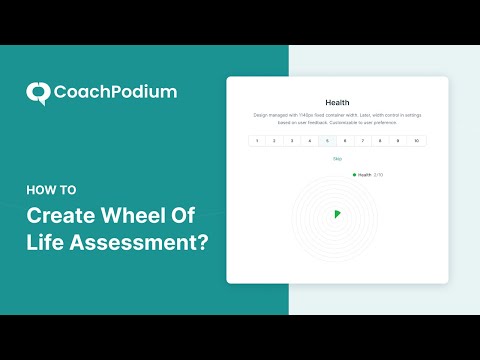
CoachPodium is a platform designed to help you generate more leads. You can create an interactive online Wheel of Life tool that enhances the experience of your prospects. It also aids in gathering insights faster, which can help tailor your coaching strategies effectively.
You can easily integrate this tool into a website, enhancing user engagement and inviting prospects to evaluate their life balance.
Here is the step-by-step guide for creating the Wheel of Life assessment using CoachPodium:
Besides CoachPodium, you can use several other tools to create your own wheel of life assessments. An example of such an assessment tool is the Wheel of Life Plugin.
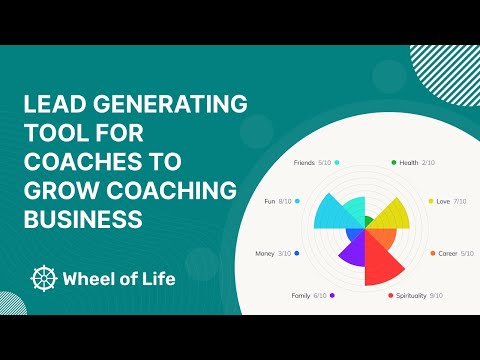
The Wheel of Life Plugin is a perfect solution to enhance your coaching business. This dynamic tool helps in understanding your prospects. The following are some benefits of this plugin:
- Create easy-to-follow assignments tailored to reveal crucial aspects of your prospects’ lives.
- Adjust the tool to reflect your unique coaching style, from its appearance to its core values.
- Transform every assessment into a potential lead, setting the stage for impactful coaching sessions.
- Utilize customizable email templates to maintain a personal touch as prospects engage with your site.
- Convert assessment results into actionable coaching opportunities with compelling messages.
- Seamlessly embed the Wheel of Life assessment anywhere on your website, ensuring maximum visibility.
Conclusion
The Wheel of Life is a versatile and powerful tool in life coaching. It helps your prospects understand their current situation and empowers them to take control of their life.
By identifying areas for improvement, setting goals, and tracking progress, you can guide your clients toward a more balanced and fulfilling life.
Key Takeaways
For Coaches Starting Out:
- Begin with the simple paper method to understand the concept.
- Practice on yourself before using with clients.
- Focus on asking good questions, not just collecting scores.
- Use it as a conversation starter, not a final answer.
For Experienced Coaches:
- Integrate digital tools to streamline your process.
- Reassess quarterly to track meaningful progress.
- Customize categories for each client’s unique situation.
- Combine with other coaching tools and frameworks.
For All Coaches:
- Remember that the wheel shows opportunities, not failures.
- Everyone’s “10” is different .Never compare clients to each other.
- The conversation about results matters more than the scores themselves.
- Use it to demonstrate coaching value and progress over time.
Your Next Steps
- Try it yourself: Create your own Wheel of Life assessment using the paper method.
- Practice interpreting: Look for patterns and ask yourself the coaching questions.
- Introduce to clients: Use it in your next intake session.
- Reassess regularly: Build quarterly check-ins into your coaching structure.
- Go digital: When you’re ready, explore online tools to enhance your practice.
Whether you’re just starting your coaching practice or looking to enhance your existing toolkit, the Wheel of Life offers a simple yet profound way to help your clients create more balanced, satisfying, and intentional lives.
Start using this transformative tool today, and watch as your clients gain clarity, set meaningful goals, and create the balanced lives they’ve been seeking.


